Showing posts with label brain death. Show all posts

Tuesday, June 21, 2016

Mourning families increasingly blocking organ donations of loved ones

Requiring consent of the family proves an obstacle to helping Ontarians on waiting list for a transplant.

Original post here : www.thestar.com

Colin Arnott gladly reaffirmed the organ donation consent of his brother Ken, who 
died following a massive stroke in 2013. In his hands is a photo of the brothers in one 
of their last races together.   (STEVE RUSSELL / TORONTO STAR)
Grieving families are blocking the organ donations of one in five Ontarians who registered to donate before they died, the Star has learned.

Data obtained by the Star from the Trillium Gift of Life Network reveals how often opportunities for potentially life-saving transplants are lost because of family objections — a number that has steadily risen over the past three years.

Whitby’s Colin Arnott said he was “surprised” when asked by Trillium representatives to “reaffirm” the consent of his brother, a registered donor who died following a stroke in 2013.

“They told us Ken had signed his donor card — I didn’t know he had — and asked us if it was true those were his wishes,” he said. “I was surprised why they were asking us to affirm his decision if he already filled out the forms and signed his donor card.”

Like the majority of families, Arnott gave the go-ahead for his relative’s donation to move forward. Yet provincial data shows the number of cases where families step in to quash a loved one’s donation is rising.

In 2013, the province’s organ and transplant registrar recorded 14.5 per cent of families (representing 26 registered donors) who refused consent, a number that climbed to 21.1 per cent (62 donors) last year.

Given that one donor can save eight lives, the would-be donors could have meant a lot of good news for 1,524 people in need of an organ transplant on Ontario’s wait list. Experts say the refusals could prove fatal to those left waiting for a donor.

“If you have someone willing to donate and their family overrides it, there are consequences where people on waiting lists may die as a result,” said Jennifer Chandler, the University of Ottawa’s Bertram Loeb Chair in Organ and Tissue Donation. “At the same time, a bereaved family’s psychological needs have to be taken into consideration as well.”

According to Chandler, the divisive topic isn’t “a legal problem but a human one.” Various cultures interpret donation “as a question that is owned by the family rather than the individual,” she said.

Under the current system, anyone 16 or older can register online, by mail or in person at ServiceOntario kiosks to consent to donate their organs — hearts, lungs and livers — and/or tissues, such as skin, bones, heart valves and eyes.

But whether a donor’s wishes are honoured is another question.

The province’s Trillium Gift of Life Act does not specifically require family to reaffirm a registered donor’s consent. However, because the act calls for donations to be cancelled if there is “reason to believe that (consent) was subsequently withdrawn,” Trillium’s practice is to ask relatives if their loved one might have changed his or her mind.

“We will not go through with donation against the wishes of the family,” said a Trillium spokesperson in an email to the Star.


Trillium president Ronnie Gavsie also said a family’s consent is critical for moving the donation process forward.

The refusal statistics illustrate the importance of donors asking their next of kin to respect their wishes after they’re gone. “This is about sharing life, not giving something away,” she said.

Three years ago, Arnott’s younger brother Ken — a hard-working father of two who “never drank or smoked a day in his life” — was cycling with friends on a Friday morning when he began to feel numb and his speech became slurred. The symptoms were warning signs of a massive stroke. The 50-year-old was rushed to an Oshawa hospital, where he died four days later.

“The doctors tried clot-busting drugs, other early intervention methods, but Ken wasn’t getting out of it,” Arnott said. Following his death, Ken’s organs went on to save the lives of seven others; he was also an eye donor.

“Ken improved lives, he saved lives,” said Arnott from his Whitby home. “A big part of this is that he lives on somewhere else.”

Knowing he was carrying out his brother’s final wishes was comforting to Arnott, who has since become an advocate for organ and tissue donation. Still, he found it concerning that relatives have the power to overrule a donor’s consent, a move he compared to “nullifying a contract.”

“If you sign the donor card, it should become some sort of legal document,” he argued.

James Breckenridge, president of the Canadian Transplant Society, argues that asking members of a grief-stricken family to reaffirm consent is “poor timing.” It places them in an “awkward situation” where making such decisions is difficult.

He fears that the result is allowing life-saving organ donations to go unused.

“The last thing a family wants to do is think about something other than their lost loved one,” he said. “But it’s an awful thing when an organ donor is denied who had already gone out of the way to become a donor in the first place.

“Their organs will be destroyed and not passed on to someone else who could have used them to live.”


Saturday, May 14, 2016

Mati Otak : Apa dan mengapa?

Mati otak berlaku apabila tiada aliran darah yang membawa oksigen ke dalam otak termasuk pangkal otak yang mengawal sistem pernafasan dan denyutan jantung. Ini boleh terjadi akibat kecederaan ataupun pendarahan dalam kepala yang teruk menyebabkan otak menjadi bengkak.

Rosak, bengkak dan mati

Oleh kerana otak berada di dalam rangka kepala yang keras, apabila otak bengkak atau pendarahan dalam kepala yang teruk berlaku, tekanan di dalam kepala akan meningkat dengan mendadak. Ini boleh menjejaskan lagi pengaliran darah yang membawa oksigen ke otak. Tanpa oksigen, otak akan bertambah rosak dan bengkak sehingga akhirnya otak akan mati.

Pesakit yang mati otak tidak mempunyai tindakbalas dan tidak bernafas tetapi oleh kerana bantuan pernafasan diberi dengan mesin (ventilator) jantungnya masih berfungsi buat seketika. Kematian otak menyebabkan organ-organ yang lain akan turut mengalami kerosakan dan akhirnya jantung akan berhenti.


Mati otak = kematian

Oleh yang demikian, apabila pesakit disahkan mati otak oleh dua orang doktor pakar yang bertauliah melalui dua ujian yang berasingan , ini bermakna pesakit tersebut telah pun meninggal dunia dan mesin pernafasan akan diberhentikan. Ujian pengesahan yang dijalankan adalah mengikut protokol yang diguna pakai di seluruh dunia dan doktor pakar yang mengesahkan kematian otak tidak mempunyai kaitan dengan bidang transplan.


Saturday, May 7, 2016

America’s Heroin Epidemic Is Actually Helping Those Waiting For Organ Transplants

 Original post here
America’s heroin epidemic is an unprecedented tragedy that continues to affect people of all walks of life. Yet, in a morbid twist of fate, it has also positively impacted another problem within the United States health care system: an ever-growing need for organ donors.
As the number of people who have lost their lives from heroin overdoses has increased, so have the number of people on the organ transplant list who have received life-saving organ donations. "It's a silver lining to what is absolutely a tragedy,” Alexandra K. Glazier, the New England Organ Bank's CEO and president, told U.S. New & World Report.
In March 2015, the Centers for Disease Control and Prevention released a report indicating that death rates tied to heroin overdoses had quadrupled over the past decade. And while this research showed heroin-induced deaths, other statistics show how a rise in prescription opioid painkiller abuse has opened the gateway for more widespread heroin use.
According to data gathered by the United Network for Organ Sharing, the number of donors who died of overdoses increased from 230 in 2006 to 848 in 2015, representing a 270 percent surge. Some of these donors had given consent to use their organs prior to their death, while others were signed up postmortem by a family member.
"Many of the families we encounter have been going through this addiction for several years," Glazier explained. "It's almost as if the families were preparing for this death; many feel great comfort in knowing that some good has come out of it."
The overdose victim is a relatively new kind of organ donor. While the number of people who fall into this slot has increased, victims of cardiovascular issues, gunshot wounds, blunt injuries, and asphyxiation remain the most common types of organs donors.
It is estimated that around 22 people die each day while waiting for an organ donation in the U.S. But while the heroin deaths may help to save these lives, some worry about the quality of the tissue, which, when it comes down to it, is donated by someone suffering from a drug addiction. Similar concerns have been raised over the use of HIV-positive organ transplants.
In 2013, President Barack Obama signed the HIV Organ Policy Equity Act, which allowed for HIV-positive organs to be donated to HIV-positive patients. Before then, the use of organs from an HIV-positive patient was strictly forbidden for any purpose, and all HIV-positive organs had to be discarded.
That said, the HOPE Act has opened the door for research on infected organ donors. Not only would this help to improve HIV-positive patients’ lives, it would help anyone who is waiting on a transplant list.

Tuesday, May 3, 2016

What Brain Death is and Why it Matters

Original article here


Technology brings with it new understandings about nature and possibilities never before imagined, along with complications and an ethical path much thornier, and harder to discern. Scientists and policymakers have long bemoaned the lag between runaway new technologies and the moral, legal, and procedural issues needed to wrangle them in. In many ways, medical science has changed how we define the most pivotal moments in life, particularly its bookends.


Those on either side of the abortion debate still argue over when conception begins. Meanwhile, on the other end, technology has allowed us to prolong life far past what we would consider a natural end, making what death is, and what it should be, extremely difficult for some to decipher, particularly when it means letting go of someone in their family. The Terry Shiavo case was an example of this. It also brings up the question of what is a dignified death, as typified by California’s new Right to Die law.


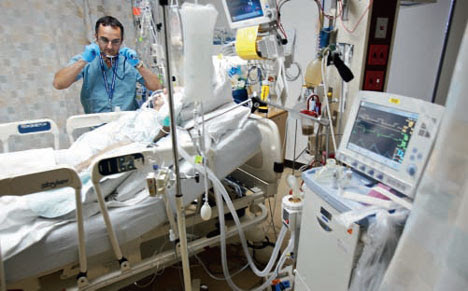
The very concept of death has been shaken up by life support technology. The heart may beat on for weeks in a living cadaver. The skin may feel warm to the touch. But without activity inside the brain, the person is dead without question. Still, with these signs, it’s hard for a family to let go. Once the brain stem is gone, they are no longer with us.


Here is where the controversy comes in. There are cases where medical professionals say a person is brain dead, while the family fights to keep their loved one on life support. For instance, the 2013 case of Jahi McMath. The thirteen year-old Oakland, Calif. native was undergoing routine surgery for sleep apnea. Surgeons were removing her tonsils and some other soft tissue, and elected procedure to help her sleep better. Unfortunately, something terrible happened while she was on the operating table.


McMath was declared brain dead on December 12 of that year. The family fought in court to keep her on the ventilator, and she was moved to another, unnamed medical facility across the country. Despite the lack of activity in her brain, her other life signs registered normal. Another case surrounded Marlese Munoz, a women 14 week pregnant who on November 26, 2014 suffered a pulmonary embolism. She was soon pronounced brain dead at John Peter Smith Hospital in Fort Worth, Texas. Here, the family insisted she be taken off life support, while the hospital refused, citing a Texas law that states such support cannot be withdrawn from a pregnant patient.


We tend to think of brain death and a coma as the same thing. In medicine, they are worlds apart. Coma is a state of unconsciousness, according to the Mayo Clinic. Generally speaking, a coma doesn’t last more than a few weeks. After that, the person awakens. Best case scenario, they regain full cognitive and physical functioning. Worst case, they remain in a persistent vegetative state. Terry Schiavo was an example of this. Such a person may move their eyes or make sounds. Yet, they cannot understand speech or respond to it. Fortunately, most comatose patients recover with time.


A brain dead person however is technically dead. They will never recover, and once removed from the machines, all bodily functions will eventually cease. The Uniform Determination of Death Act states that the cessation of respiratory or heart functions, or of brain functioning inside the brain stem constitute brain death.


Lower brain functions derive from the top portion of our spinal cord. This is responsible for body function regulations such as breathing, heartbeat, the reflexes, sleep-wake cycles, and body temperature. The Upper Brain is where higher functions take place, such as the five senses. With brain death, neither the upper nor the lower part of the brain functions. But certain body functions, including the heartbeat, may go on. Though these give some families hope, unless it is a case of misdiagnosis, the patient will never recover.


Physicians say it is difficult for many grieving families to understand that a person is dead, even when their heart is still beating. Whereas the heart usually stops at some point within the first 72 hours, in can in some cases continued to beat for a week or more. Without brain function, someone on a ventilator may look like their breathing. But they could never do it on their own.


The American Academy of Neurology updated the guidelines for brain death in 2010. Here, doctors must go through a checklist including 25 separate items before brain death can be declared. All the criteria must be met. However, these definitions vary legally from one state to the next. Even so, no one has ever been declared brain dead and survived.


Brain death was a term first created for the routinization of organ and tissue harvesting. That’s according to Margaret Lock, a medical anthropologist at McGill University in Montreal. In an article called, “Inventing Death and Making it Believable,” she writes that the concept of brain death only exists to give legal parameters in cases where the organs were still viable, yet the patient is longer alive. This designation became protection for medical professionals and organizations to handle such organs without fear of legal reprisal.


Many countries today argue over just what brain death actually means. There is no conception of this in Japanese culture for instance. They do not discriminate between the heart and the mind, which in the West comes from Descartes. Whereas, in America, it has a hard and detailed definition. Without this designation, organ donation would be hobbled.


That doesn’t stop unscrupulous organ traders and medical centers from harvesting organs even before families are made aware that their loved one is deceased. Since a large number of accidents and incidents of violence happen in the inner cities of America, a disproportionate number of organs come from these places. Many times the families are not made aware, or medical centers don’t do everything they can to make sure families know before their loved ones organs are made into a commodity. Medical technologies have bred so much advancement, and have helped improve human life in tremendous ways. But the ethical lag means that there are a lot of dark corners and niches that cause waste, deceit, denial, and harm. How we move forward in these instances, and what motivations are involved must also be considered.


To learn more click here:


Mati Otak

Mati otak berlaku apabila tiada aliran darah yang membawa oksigen ke dalam otak termasuk pangkal otak yang mengawal sistem pernafasan dan denyutan jantung. Ini boleh terjadi akibat kecederaan ataupun pendarahan dalam kepala yang teruk menyebabkan otak menjadi bengkak.
Oleh kerana otak berada di dalam rangka kepala yang keras, apabila otak bengkak atau pendarahan dalam kepala yang teruk berlaku, tekanan di dalam kepala akan meningkat dengan mendadak. Ini boleh menjejaskan lagi pengaliran darah yang membawa oksigen ke otak. Tanpa oksigen, otak akan bertambah rosak dan bengkak sehingga akhirnya otak akan mati.
Pesakit yang mati otak tidak mempunyai tindakbalas dan tidak bernafas tetapi oleh kerana bantuan pernafasan diberi dengan mesin (ventilator) jantungnya masih berfungsi buat seketika. Kematian otak menyebabkan organ-organ yang lain akan turut mengalami kerosakan dan akhirnya jantung akan berhenti.  Oleh yang demikian, apabila pesakit disahkan mati otak oleh dua orang doktor pakar yang bertauliah melalui dua ujian yang berasingan , ini bermakna pesakit tersebut telah pun meninggal dunia dan mesin pernafasan akan diberhentikan. Ujian pengesahan yang dijalankan adalah mengikut protokol yang diguna pakai di seluruh dunia dan doktor pakar yang mengesahkan kematian otak tidak mempunyai kaitan dengan bidang transplan.